Transition From Potty Training
Goodnites or Pull-Ups: What Should My Child Use?
08 May, 2026
5 min. Read
Pull-Ups® and Goodnites® may appear similar; however they serve very different purposes in the potty training journey and bedwetting.
Training pants are intended to help a child learn how to use the potty during the day. Pull-Ups® Training Pants are specifically designed for potty training; they’re a teaching tool with a Learning Layer™ that helps your child notice when they’re wet. With an underwear-like design, they’re easy to slide up and down for bathroom breaks, giving kids a sense of independence while still providing protection for daytime accidents.
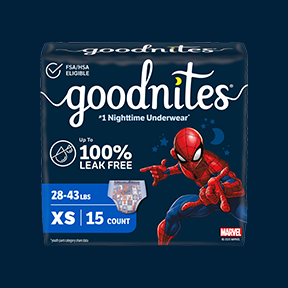
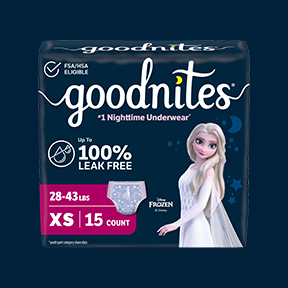
Goodnites® Nighttime Underwear, on the other hand, aren’t for potty training; they’re for managing bedwetting, a medical condition that some children may experience. Goodnites® are for potty-trained kids who still wet the bed. They provide up to 100% leak protection. Let’s discover more about each product to determine which is best for your child.
Pull-Ups® is the #1 brand for potty training** and offers up to 100% leak-free protection.
**Based on US Nielsen data from the last 52 weeks ending 01/24/26
Here’s how you can help your child transition to Gooodnites®:
It’s time to consider switching to Goodnites® Nighttime Underwear when your child does the following:
Goodnites offer zoned protection where boys and girls need it most. They are up to 100% leak free no matter how your child sleeps™. Check out the Goodnites® Nighttime Underwear Size Guide to help you find the right fit based on your child’s weight.
During the day, your child’s brain and body are in sync, so it’s easier for them to recognize the sensation of a full bladder, stop what they’re doing, and make it to the bathroom just in time. It’s all about conscious control and awareness, skills they build through potty training. But at night? The rules change and there are different factors at play.
±ages 3-12
Training pants are intended to help a child learn how to use the potty during the day. Pull-Ups® Training Pants are specifically designed for potty training; they’re a teaching tool with a Learning Layer™ that helps your child notice when they’re wet. With an underwear-like design, they’re easy to slide up and down for bathroom breaks, giving kids a sense of independence while still providing protection for daytime accidents.
Goodnites® Nighttime Underwear, on the other hand, aren’t for potty training; they’re for managing bedwetting, a medical condition that some children may experience. Goodnites® are for potty-trained kids who still wet the bed. They provide up to 100% leak protection. Let’s discover more about each product to determine which is best for your child.
When are Pull-Ups® the Right Choice?
Pull-Ups® Training Pants are a great option when your child is just starting out on their potty-training journey. Here are a few ways to know that they are ready to use a product like Pull-Ups®:- They’re learning to recognize bathroom signals and can pull their pants up and down by themselves.
- They have daytime accidents but are working toward using the toilet every time they need to go.
- They still need extra protection when out and about, like at daycare, at kindergarten, on road trips, or sleepovers.
- They usually stay dry overnight or wear training underpants, designed specifically for nighttime.
**Based on US Nielsen data from the last 52 weeks ending 01/24/26
When Should You Switch to Goodnites® Nighttime Underwear?
Goodnites® Nighttime Underwear are designed for kids who are potty-trained and stay dry during the day but still experience nighttime accidents. Goodnites® offers extra absorbency and is tailored to fit comfortably for nighttime dryness.Here’s how you can help your child transition to Gooodnites®:
It’s time to consider switching to Goodnites® Nighttime Underwear when your child does the following:
- They are potty trained but still wet the bed at night.
- They stay dry during the day and rarely have accidents outside of bedtime.
- They wet the bed regularly at night, causing disrupted sleep and extra laundry.
- They are typically four years or older and have moved beyond the potty-training stage.
- They feel embarrassed or anxious about nighttime accidents and still need reliable protection.
- They want a product that looks and feels more like regular underwear, helping them feel more grown-up while also keeping them comfortable and dry.
How is Nighttime Dryness Different from Daytime Potty Training?
It’s easy to think that once your child is potty trained during the day, nighttime dryness will fall automatically into place. But the thing is, nighttime dryness is driven by its own set of physical and developmental timelines.During the day, your child’s brain and body are in sync, so it’s easier for them to recognize the sensation of a full bladder, stop what they’re doing, and make it to the bathroom just in time. It’s all about conscious control and awareness, skills they build through potty training. But at night? The rules change and there are different factors at play.
- Capacity and Development: Accidents can continue overnight because your child’s brain-bladder connection (meaning, how the brain and bladder communicate and interact) is still developing and they don’t yet recognize a full bladder when they’re asleep.
- Sleep Patterns: If a child is a heavy sleeper or has a sleep disorder, such as obstructive sleep apnea, it can cause a child to not wake up to use the bathroom when their bladder is full.
- Hormonal Factors: The body releases a hormone called vasopressin. This hormone tells the kidneys to reduce the production of urine during sleep. Children who wet the bed may not have enough of this hormone being secreted and therefore their body makes more urine than their bladder can hold.
How to Support Your Child During Bedwetting
Bedwetting is common. In fact, 1 in 6 kids± experience nighttime accidents. Here’s how you can support your child through this phase with patience, understanding, and the right tools:- Stay Calm and Reassuring: Never punish or shame your child for wetting the bed. let them know that they are not alone, and it is not their fault.
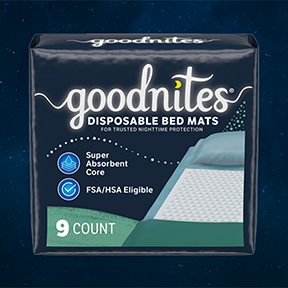
- Use the Right Products: Goodnites® NightTime Underwear are designed to help keep older children dry overnight. Goodnites® Bed Mats provide extra mattress protection at home or while traveling.
- Establish Gentle Bedtime Routines: Encourage your child to use the bathroom right before bed. Try cutting back on drinks one or two hours before bed, but don’t restrict water to the point of discomfort.
- Normalize It: Share that many kids go through the same thing. Around 5 million children older than age 6 in the US wet the bed, according to the American Academy of Pediatrics.
- 5. Lead with Love: Bedwetting can shake a child’s confidence. They might feel like they’re “backtracking” after potty training success. Remind them they’re growing and learning.
References
- Cleveland Clinic, 2023. Bedwetting (Nocturnal Enuresis). [online] Cleveland Clinic. Available at: https://my.clevelandclinic.org/health/diseases/15075-bedwetting [Accessed 14 Jul. 2025].
- HealthyChildren.org, 2023. Bedwetting (Nocturnal Enuresis). [online] American Academy of Pediatrics. Available at: https://www.healthychildren.org/English/ages-stages/toddler/toilet-training/Pages/Bedwetting.aspx [Accessed 14 Jul. 2025].
- National Center for Biotechnology Information (NCBI), 1997. Nocturnal enuresis: the roles of functional bladder capacity and nocturnal urine production. [online] PubMed. Available at: https://pubmed.ncbi.nlm.nih.gov/9152831/ [Accessed 14 Jul. 2025].
- Texas Children's Hospital, 2024. Nocturnal Enuresis (Bedwetting). [online] Texas Children's Hospital. Available at: https://www.texaschildrens.org/content/conditions/nocturnal-enuresis-bedwetting [Accessed 14 Jul. 2025].
- Boston Children's Hospital, n.d. Bedwetting (Nocturnal Enuresis). [online] Boston Children's Hospital. Available at: https://www.childrenshospital.org/conditions-treatments/bedwetting-nocturnal-enuresis [Accessed 29 Apr. 2026].
- American Academy of Family Physicians, 2022. Enuresis in Children. [online] American Family Physician. Available at: https://www.aafp.org/pubs/afp/issues/2022/1100/enuresis-children.pdf [Accessed 29 Apr. 2026].
- Children's Hospital of Philadelphia, n.d. Bedwetting (Nocturnal Enuresis). [online] Children's Hospital of Philadelphia. Available at: https://www.chop.edu/conditions-diseases/bedwetting-nocturnal-enuresis [Accessed 29 Apr. 2026].
- Johns Hopkins Medicine, n.d. Bedwetting (Enuresis). [online] Johns Hopkins Medicine. Available at: https://www.hopkinsmedicine.org/health/conditions-and-diseases/bedwetting-enuresis [Accessed 29 Apr. 2026].
Note: The information provided in this article is for informational purposes only and is not intended as medical advice. Always consult your child’s medical provider with any questions and/or concerns you may have regarding medical symptoms and conditions.